Line Boring Machine: How On-Site Hole Repair Works
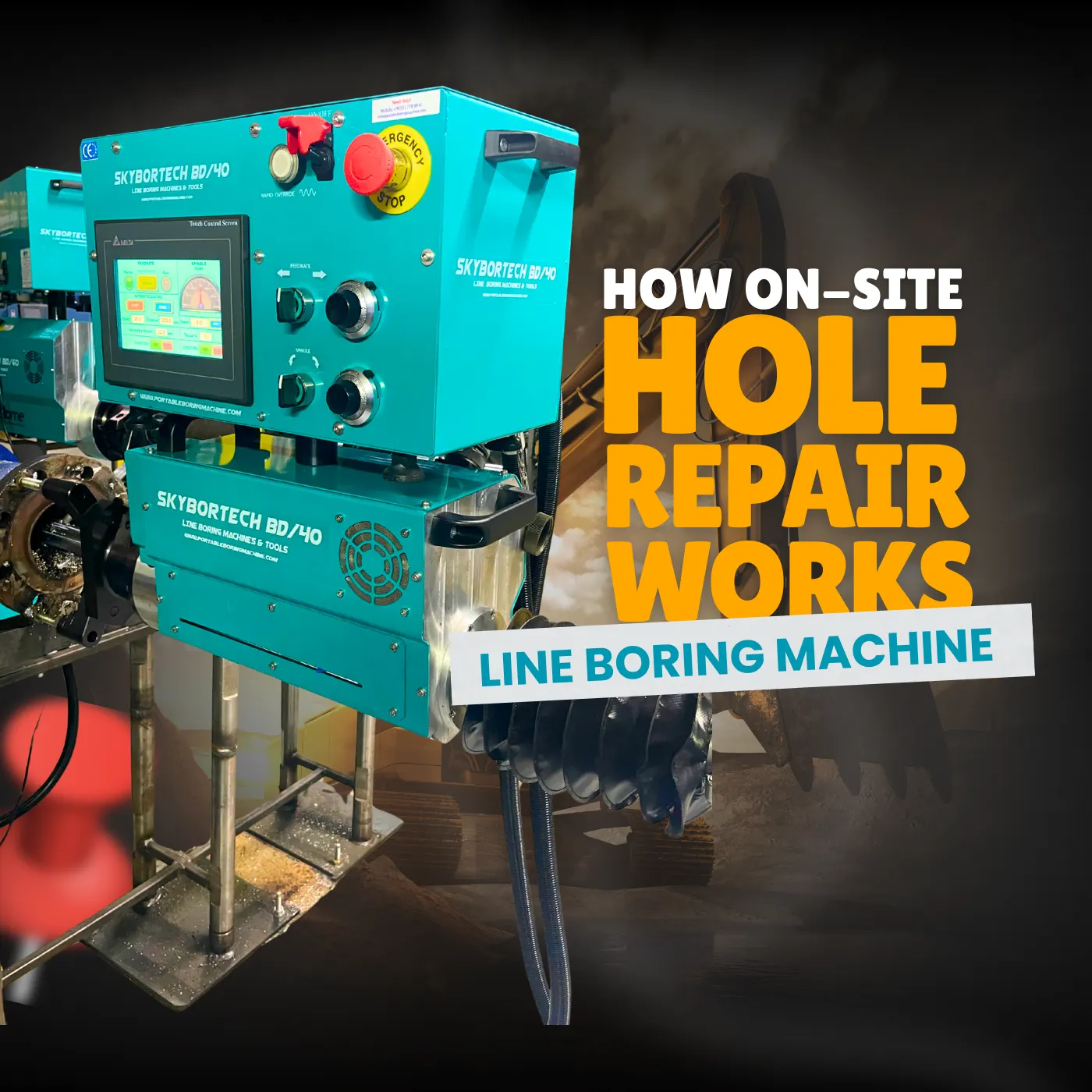
A Line Boring Machine is a heavy duty machine tool which is mainly used for maintain & repairing of heavy equipment’s bored holes such as on dozer, excavator, loader, hydraulic crane etc. If the hole and part are old then maybe have even been worn due to constant use in a production area where it takes play or movement in the joint or connection – this borning could cause noise at these same joints during operation. Instead of cutting out and taking large parts to the workshop, these can be repaired directly in the field..saving time and money.
Used for wear cavities in excavators, loader, dozer and industrial frames. Stress and motion over time warp the hole shape. Pins stop fitting tight. Bushings fail faster. When we don’t pay attention to this, the damage is further compounded.
That’s where line boring is the clever fix.
Why Worn Spots Lead to Trouble
A hole can appear ok at first glance. But tiny wear moves the centerline. When the pins sit off-center, the loads spread unevenly.
This causes cracks around joints. Pins bend. Bushings spin in place. Repairs become harder later.
Re-boring brings the hole back to the correct diameter and axis. It restores the joint to its factory fit.
How Portable Line Boring Machine works On Site
The machine is mounted directly on the workpiece. A dull bar extends through the damaged hole. The alignment is maintained when cutting occurs.
Intricate material-reducing processes are applied step by step. This prevents the surface from bulging and from becoming rounded. Bore welding before machined is also available for many systems.
The most important advantage is no tear-down for accuracy. Most of the consideration applies where we’re at.
Why On-Site Repair Is Preferable
Moving heavy parts takes time. Cranes, trucks and labor add expense in a hurry. Production comes to a standstill as parts go hither and yon.
On-site line boring avoids transport. Repairs are done where the machine sits. From days to hours as a result of that down time.
This is a huge benefit for field teams.
Typical Line Boring Jobs
Construction equipment needs it often. The points of failure are always the excavator buckets, boom joints, and stick ends.
There are heavy loads and dirt in mining machines. Line boring helps them keep on running.
It finds application in industrial plants on presses, frames and rotary apparatus. Farm equipment gets a break during peak seasons, too.
Except for those jobs having high pins.
What to Consider Before You Buy a Machine
Hole size range matters most. Ensure system covers your typical jobs.
Bar stiffness affects accuracy. Chuckers should have a robust cross drilled bar, to dampen chatter on large bores.
Mounting options save setup time. Stable mounts reduce alignment errors.
Ease of use also matters. Basic controls make it easier for crews to work faster in the field.
New vs. Used: Let’s Consider Pros and Cons
Used machines cost less upfront. Inspect bearings and bars for wear. Parts support is important.
New machines come with has longer life and revised designs. Support and training are sometimes part of the package.
Consider long-term value, not just price.
A Line Boring Machine is not so much a repair tool as it is a product enhancer. It keeps machines running and slashes downtime.
Contact us for more details…
For crews working with heavy machinery, repurposing on site enables faster and more dependable repairs. And done right, worn holes are no longer a major issue.
Portable line boring welding machine are mounted on the workpiece with a three-point carrier material.
For example; If the connection holes of an excavator bucket are to be machined.
They are mounted on the workpiece of the portable line boring welding machine
with various connection equipment so as not to cause axis misalignment.